
Check what’s in the competing pack
A lower-priced listing may contain less product. Here’s what to check before responding to a retailer’s request to cover lost margin.
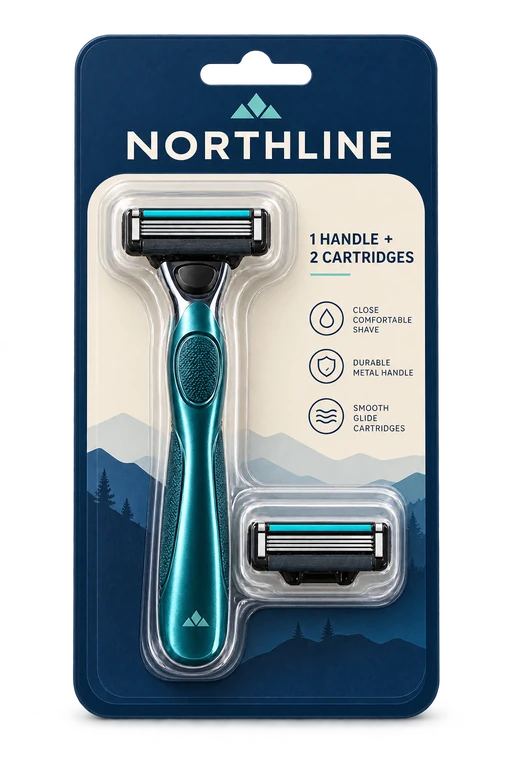
1 handle + 2 cartridges
2 cartridges total, including fitted cartridge
$10.97
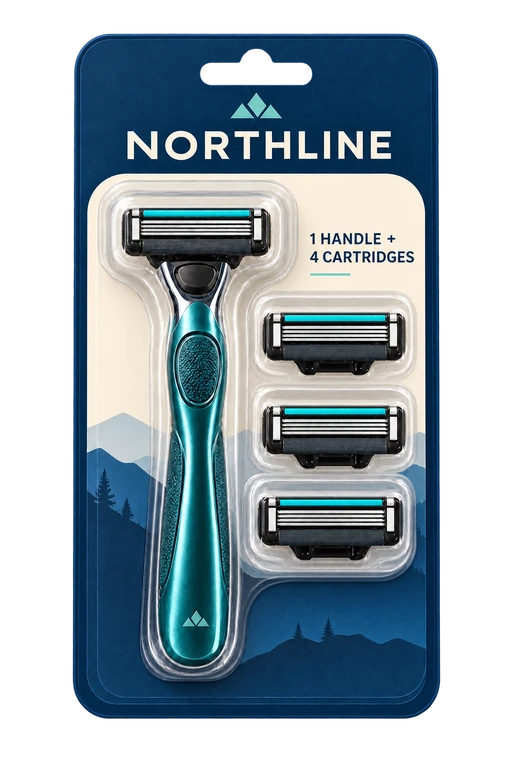
1 handle + 4 cartridges
4 cartridges total, including fitted cartridge
$16.49
Both kits include the same handle and cartridge type. The $10.97 kit contains two fewer cartridges.
Does the competing offer contain the same thing?
Your retailer drops its price, then asks your brand to cover the lost margin. You find a cheaper listing for what looks like the same product. Before responding, check the contents: a matching brand name and product image can hide a different pack.
For identical products sold in different quantities, divide each price by the total quantity in the pack using the same unit. For kits, first check every component. A handle and two cartridges is a different offer from a handle and four.
A handle with two cartridges versus a handle with four
In this fictional example, the competing listing is $10.97 for one handle and two cartridges. Your retailer’s kit contains the same handle and four of the same cartridges, and was priced at $16.49 before the drop. Both cartridge counts include the one fitted to the handle.
If the retailer matched the $10.97 price directly, the question is how it accounted for the two extra cartridges. The $10.97 listing contains two fewer cartridges.
Why not just divide by cartridge count?
Both prices include a handle. Dividing each kit price by its cartridge count assigns the handle’s cost across a different number of cartridges, so it does not isolate the cartridge price. Show the handle and cartridge counts alongside each price.
Ask which listing the retailer used and whether it adjusted for the cartridge count.
Check the listing before building your case
Confirm the handle model, cartridge type, and total cartridge count. “Four refills” could mean four cartridges plus one already fitted; “four cartridges total” means something else. If the title, image, and description disagree, record the discrepancy.
Check the seller and the conditions of the lower price too. A subscription discount, member-only offer, or buy-two promotion may not apply to a one-time purchase of one kit. Keep those conditions with the screenshot, and account for delivery charges consistently.
Give the retailer a specific comparison to review
Put the listings side by side with their URLs, screenshots, seller names, observation dates, contents, and offer conditions. Make the difference easy to see. If the retailer confirms it matched the two-cartridge kit without adjusting for the contents, you could respond:
“The other retailer sells a handle with two cartridges for $10.97. We sell a handle with four cartridges on your platform. We don’t think we should cover the lost margin from matching the price of a kit with two fewer cartridges.”
Finding a likely source listing does not prove it caused the drop. The retailer may have used another offer or already adjusted for the contents. Ask for those details if the retailer disputes your comparison.
Price Oversight helps teams find likely source listings and gather screenshots and comparison details for that discussion. Your team handles the conversation with the retailer.